Is Metabo Drops Legit?
Metabo Drops appears as a real commercial product with an identifiable purchase path, but “legitimate,” “effective,” and “evidence-backed” are not the same thing. This buyer guide separates product existence, seller legitimacy, checkout and refund signals, and the strength of the underlying health claims.
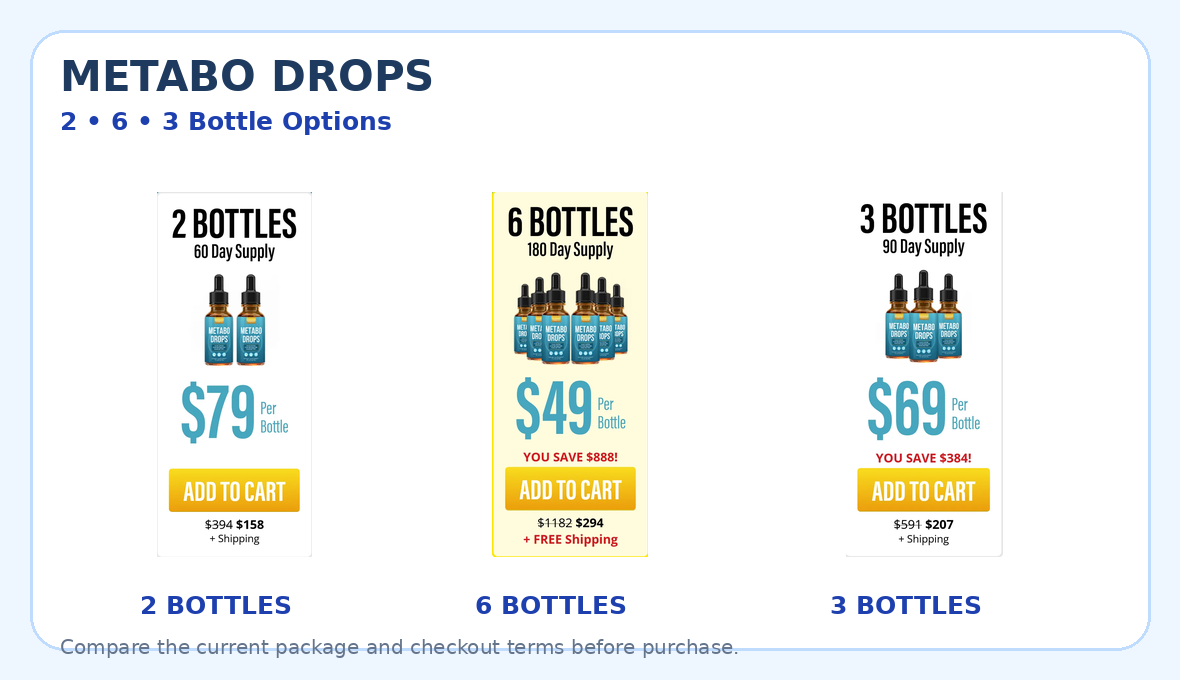
Review the Product Only After Checking the Seller Path
Use the legitimacy checklist on this page first. If the current merchant route, refund terms, formula information and evidence boundaries are satisfactory, you can continue to the offer.
CHECK CURRENT OFFER
Legitimate Product, Legitimate Purchase Path, Legitimate Claims
Buyers often compress three different questions into “is it legit?” Keeping them separate produces a much stronger answer.
1. Product existence
Is there a clearly identifiable product, current merchant destination, checkout route, package presentation and order process? This establishes a real commercial offer, not clinical effectiveness.
2. Commercial legitimacy
Can a buyer identify who takes payment, where order support goes, what refund terms apply and how the seller handles purchase questions?
3. Evidence legitimacy
Do the scientific claims match the evidence? Coffee, caffeine or ingredient research should not be presented as though it were a clinical trial of the exact finished product.
What Should a Buyer Verify Before Calling a Product Legit?
Merchant destination
Follow the purchase path and confirm that the product name, package options and checkout are consistent. Avoid assuming any page using “official” language is necessarily the merchant.
Payment processor
A recognizable checkout process is a positive commercial signal, but it is not proof that the health claims are scientifically established.
Refund terms
Look for a stated refund or guarantee process and understand who controls the decision, return requirements and timing.
Contact route
Order, payment, shipping and product-use questions may go to different parties. A credible purchase path should make those roles understandable.
Formula transparency
Ingredient names are useful, but exact forms and amounts are needed before outside research can be matched meaningfully to the product.
Claim specificity
The more specific the claim, the more specific the evidence should be. “Supports metabolism” and “causes substantial weight loss” require very different levels of proof.
A Real Product Can Still Use Claims That Need Stronger Evidence
This is the most important distinction on the page. Commercial legitimacy and scientific validity are related only indirectly.
Coffee research
Supports claims about coffee as a beverage under the conditions studied.
Caffeine research
Supports claims about caffeine exposure, including acute metabolic-rate and thermogenic effects.
Ingredient research
Supports only the tested ingredient form, dose, population and outcome.
Finished-product evidence
Required when the claim is about Metabo Drops itself as a complete formula.
A legitimate checkout does not turn ingredient research into product-specific clinical proof.
What the Supplied Coffee Research Adds—and What It Does Not
The scientific material supplied for this project provides useful context for coffee, caffeine and metabolism. It should not be used to overstate the finished product.
What it supports
The research reports acute caffeine-related effects on metabolic rate, energy expenditure and fat oxidation under studied conditions, and broader associations between habitual coffee intake and body-composition or metabolic markers.
What it does not support
It does not establish that Metabo Drops itself causes substantial weight loss, permanently increases metabolism or reproduces the same findings as a coffee or caffeine study.
What Would Actually Count as a Scam Warning Sign?
A product should not be called a scam merely because a buyer dislikes the marketing or finds the evidence weak. Stronger indicators involve deception, impersonation, unauthorized charging or materially false commercial conduct.
| Signal | What it may mean | How to respond |
|---|---|---|
| Copied “official” sites | Potential impersonation or affiliate confusion. | Verify the actual seller and checkout route. |
| Fabricated ratings | Weak trust signal or misleading marketing. | Ignore unsupported star totals and look for sourceable evidence. |
| Fake scarcity | Pressure tactic. | Do not use countdowns or stock claims unless independently verifiable. |
| Unclear recurring billing | Potential commercial risk. | Confirm whether payment is one-time or recurring before checkout. |
| No refund route | Weak purchase protection. | Review merchant support and guarantee terms before payment. |
| Claiming clinical proof without a product trial | Evidence overstatement. | Ask whether the exact finished product was actually studied. |
Why Amazon or Walmart Listings Need Their Own Legitimacy Check
A marketplace listing can be real without being merchant-authorized. Seller identity, inventory age, package version and refund rules can differ from the official merchant route.
Amazon
Check who the seller is, whether the listing matches the current formula and package, who fulfills the order and which return policy applies.
AMAZON GUIDEWalmart
Distinguish direct retail stock from third-party marketplace listings and verify authenticity, seller identity and returns.
WALMART GUIDEA Practical Legitimacy Checklist Before Purchase
Seller
Can you identify the merchant or payment processor?
Product
Does the product name, packaging and formula match across the sales path?
Price
Are package prices and any shipping terms clear before checkout?
Billing
Is the transaction one-time or recurring, and is that clearly disclosed?
Refund
Can you identify the current guarantee and support path?
Evidence
Are product claims supported by product-specific evidence rather than borrowed from unrelated studies?
If the Seller Path Checks Out, Review the Current Offer
Commercial legitimacy is only one part of the decision. Also review safety, formula transparency, evidence quality, price and refund terms before purchasing.
CHECK METABO DROPS OFFER
Metabo Drops Legitimacy FAQ
Is Metabo Drops a real product?
Metabo Drops is presented through an identifiable commercial sales path. That supports product existence, not automatic proof of efficacy.
Does ClickBank make a product legitimate?
A recognizable payment platform can support the legitimacy of the transaction pathway, but it does not independently validate health claims.
Is Metabo Drops FDA approved?
The supplied project materials do not support describing Metabo Drops as “FDA approved.” Dietary supplements and individual product claims should be described accurately rather than using drug-approval language.
Can a real product still be overhyped?
Yes. Commercial existence and scientific evidence are separate questions. A real product can still use claims that go further than the supporting research.
How can I tell if I am on the correct purchase page?
Check that the product, package presentation, checkout and merchant path are consistent and avoid relying on “official website” wording alone.
What is the biggest legitimacy red flag?
There is no single universal red flag, but fabricated ratings, copied testimonials, fake scarcity, unclear recurring billing and unsupported clinical-proof claims deserve scrutiny.
Continue Your Metabo Drops Check
Review the Current Metabo Drops Offer
If the product, seller path and evidence boundaries meet your criteria, continue to the current merchant offer.
VIEW CURRENT OFFER