Coffee polyphenol
Chlorogenic Acid
Relevant to coffee and glucose-metabolism research. Ingredient evidence must still be matched to the exact form and dose in a commercial product.
Metabo Drops is marketed as a coffee add-in for metabolic and weight-management support. Before buying, understand what the product contains, what coffee and caffeine research actually supports, which claims need stronger evidence, and how to evaluate reviews, complaints, safety, price, refunds and purchase channels.
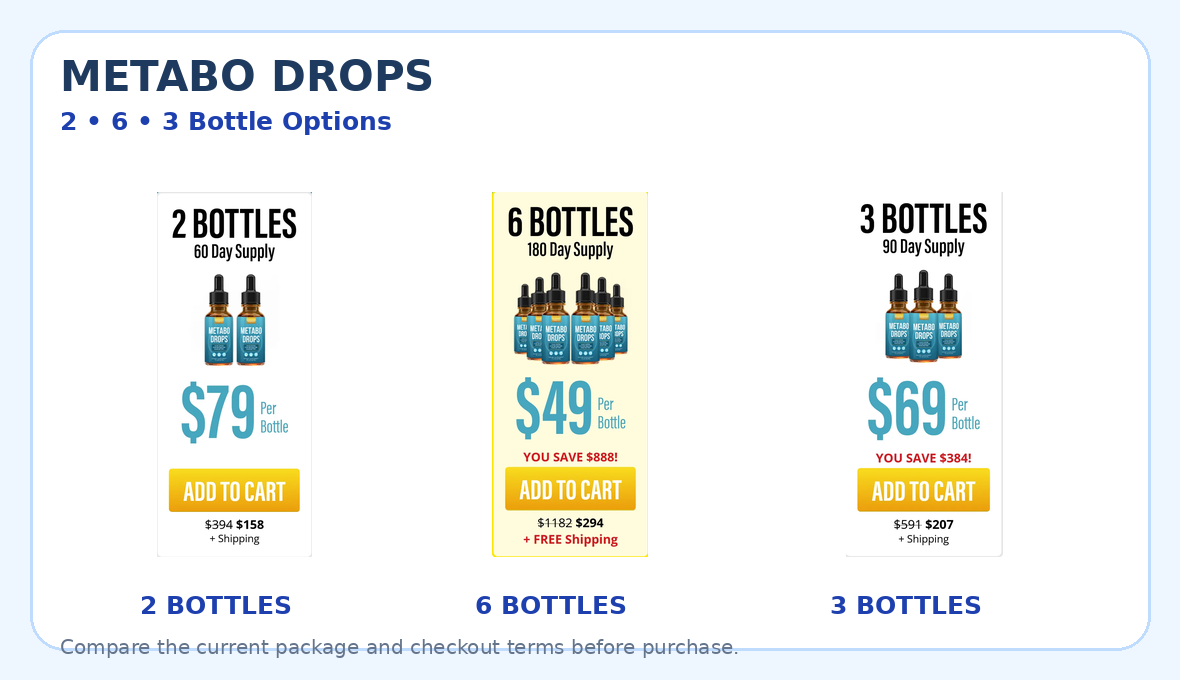
Use the buyer research on this page to separate product existence, marketing language, ingredient evidence and finished-product proof. If the product still fits your goals, continue to the merchant offer.
VIEW METABO DROPS OFFER
| Buyer question | Research summary |
|---|---|
| What is it? | A liquid supplement positioned for use with coffee. |
| What is the main product theme? | Metabolic and weight-management support. |
| Which ingredient themes appear in the current product assets? | Chlorogenic acid, Camellia sinensis, chromium, L-carnitine, L-theanine and a vitamin complex. |
| What does research establish? | Coffee, caffeine and several ingredient categories have relevant human research. That evidence is not automatically finished-product evidence. |
| What should a buyer investigate? | Effectiveness, exact formula, safety, side effects, seller authenticity, price, marketplace listings, refund terms and customer support. |
| Where is the purchase decision made? | On the current merchant destination reached through the offer link. |
“Legit” can mean several different things. A product may be commercially real while some marketing claims remain unproven. A more useful review separates the questions.
Can the product, merchant route and checkout be identified? This answers whether there is a real commercial offer, not whether the product works.
Can buyers find current merchant terms, a refund process, order support and a recognizable payment route?
Are specific health or weight claims supported by evidence appropriate to the exact claim, formula, dose and population?
The right answer depends on the outcome being claimed. Research on caffeine can support a caffeine effect. Research on an ingredient can support that ingredient under comparable conditions. Neither automatically proves that the complete Metabo Drops formula produces meaningful long-term weight loss.
What is known about coffee as a beverage, including caffeine and non-caffeine bioactives?
What happens to metabolic rate, thermogenesis and substrate use after caffeine exposure?
Do the individual ingredients change relevant outcomes in human studies at comparable forms and doses?
Does the commercial formula actually match the ingredient forms and amounts used in the studies?
Has the exact product itself been studied for the specific outcome being claimed?
The strongest relevant research is much narrower than a dramatic “fat-burning” promise. Human studies support acute metabolic effects of caffeine and report longer-term associations for habitual coffee intake, but those evidence layers answer different questions.
Caffeine can produce an acute increase in energy expenditure under studied conditions.
Caffeine can temporarily increase heat-producing metabolic activity.
Human research and meta-analyses support increased fat oxidation in some settings, including aerobic exercise.
A temporary metabolic response does not establish a large or durable reduction in body weight.
“Can influence metabolism” is a much narrower scientific claim than “will cause substantial weight loss.”
The higher habitual coffee-intake groups had lower body-fat percentage, lower total fat mass, lower visceral fat area and higher skeletal muscle mass, while BMI was broadly similar across groups.
The useful question is not simply whether an ingredient has a metabolic mechanism. It is whether the exact form and dose has relevant human evidence, and whether that evidence can reasonably be applied to the complete formula.
Relevant to coffee and glucose-metabolism research. Ingredient evidence must still be matched to the exact form and dose in a commercial product.
Relevant to catechin and caffeine research. Extract composition, standardization and dose determine whether outside evidence is transferable.
Chromium participates in normal nutrient metabolism. A normal physiological role does not by itself establish additional weight-loss benefit from supplementation.
L-carnitine has a genuine role in mitochondrial fatty-acid transport. Mechanistic relevance is not the same as demonstrated fat loss.
Often paired with caffeine in formulations designed around the stimulant experience. That is different from direct thermogenic or weight-loss evidence.
Vitamins support normal energy-yielding metabolism. Correcting inadequacy and causing additional weight loss are separate evidence questions.
Safety depends on the exact formulation and the user. The coffee routine also matters because total stimulant exposure can come from multiple sources.
Sleep disruption, jitteriness, anxiety or palpitations can matter for susceptible users.
Coffee and supplement ingredients can cause gastrointestinal discomfort in some people.
Potential interactions matter more than the appeal of a metabolic marketing claim.
People using glucose-lowering medication should consider the total metabolic context with a qualified professional.
Supplement and caffeine decisions should be individualized rather than inferred from general adult research.
Duplicate ingredients and cumulative stimulant exposure can be easy to miss when several products are used together.
This site should not invent complaints or manufacture customer stories. The useful approach is to identify recurring purchase questions and test them against product facts, merchant terms and evidence.
Separate the user's expected outcome from what the evidence actually predicts and from the duration of use.
Ingredient names alone are not enough to match a commercial formula to a clinical study.
Value depends on the formula, evidence, package economics and the buyer's alternative options.
Use current merchant terms and keep order confirmation details.
Verify seller identity rather than relying on an “official website” headline alone.
Marketplace listings require separate authenticity and return-policy checks.
Commercial availability answers whether something exists for sale.
A claim can go beyond available evidence without proving the entire transaction is fraudulent.
Requires stronger evidence of deception, impersonation, unauthorized charging or other fraudulent conduct.
A testimonial can describe one person's experience. It cannot establish effectiveness for a population.
READ METABO DROPS REVIEWS| Outcome | Relevant evidence layer | Reasonable interpretation |
|---|---|---|
| Alertness | Caffeine physiology | Plausible acute effect where caffeine exposure is present. |
| Metabolic rate | Controlled caffeine studies | Possible temporary increase. |
| Thermogenesis | Controlled caffeine studies | Possible acute increase. |
| Fat oxidation | Human trials and meta-analysis | Can increase under some conditions. |
| Appetite | Mixed coffee literature | Variable and context-dependent. |
| Body-fat reduction | Longer-term intervention required | Not established for Metabo Drops by general coffee research. |
| Large weight loss | Finished-product evidence required | Cannot be inferred from caffeine mechanisms. |
Transformation images can be persuasive without being scientifically informative. They should be evaluated for factors that can substantially change appearance without proving a product effect.
Direction and intensity alter shadows and definition.
Body position can change apparent waist and abdominal shape.
Water and glycogen changes can alter short-term appearance and scale weight.
A transformation without a defined interval is difficult to evaluate.
Concurrent calorie or food-pattern changes can explain weight change.
Training can materially affect body composition.
Fit and styling can change perceived shape.
The most dramatic story may not represent typical outcomes.
Marketplace availability can change. Check seller identity, product version, authenticity, fulfillment source and which refund policy applies.
AMAZON GUIDEDistinguish direct retail stock from third-party marketplace listings and confirm seller, package and return terms.
WALMART GUIDEPackage pricing should be refreshed from the current merchant offer at publication time rather than copied from an older screenshot.
PRICE GUIDEThe merchant's current terms control the refund window, eligibility, return process and any guarantee.
REFUND GUIDEThe supplied coffee cohort goes beyond simple body-weight measures and reports correlations involving glucose-insulin markers and circulating metabolites. These findings help explain the wider metabolic research landscape, but they remain population-level associations.
In men, higher habitual coffee intake correlated with lower fasting insulin and lower insulin responses during the oral glucose tolerance test, alongside lower insulin-resistance indices and higher insulin-sensitivity measures.
Higher coffee intake correlated inversely with circulating BCAAs in both sexes. The biological meaning is still being investigated.
These correlations do not show that Metabo Drops reproduces the same pattern or that changing coffee intake causes the observed biomarker differences.
The supplied cohort reported sex-specific hormonal associations, but these should not be converted into a testosterone marketing claim for Metabo Drops.
In men, higher habitual coffee intake was associated with higher total and bioavailable testosterone and higher SHBG, alongside lower free testosterone and free androgen index. Associations in women were more limited. The researchers emphasize that these findings describe population-level endocrine patterns rather than clinically meaningful individual hormonal changes.
Coffee is chemically variable. Bean origin, roasting and brewing alter the concentration of caffeine, chlorogenic acids, diterpenes and other compounds.
Paper filtration can substantially reduce diterpenes such as cafestol and kahweol. In the supplied cohort, filtered coffee was by far the most commonly reported preparation among coffee consumers.
Diterpene exposure can be higher and is relevant to lipid-related effects, so results from one coffee preparation should not automatically be generalized to another.
Metabo Drops is marketed as a liquid supplement designed to be added to coffee as part of a metabolic-support and weight-management routine. Product positioning should be kept separate from what independent research proves.
Coffee, caffeine and individual ingredients have relevant research, but those studies do not automatically establish the effectiveness of the complete Metabo Drops formula. Product-specific claims require product-specific evidence.
A real commercial sales path and identifiable checkout can support commercial legitimacy, but they do not validate every efficacy claim. Product existence, purchase legitimacy and clinical effectiveness are three different questions.
The word scam should be reserved for evidence of deception or fraud. Aggressive marketing, weak evidence or an unconvincing claim is not by itself proof of fraud. Buyers should check seller identity, checkout, refund terms, ingredient disclosure and claim support.
The current product assets identify chlorogenic acid, Camellia sinensis, chromium, L-carnitine, L-theanine and a vitamin complex. Exact amounts and forms should be confirmed against the current merchant information before purchase.
The product is designed around a coffee routine and Camellia sinensis can also be relevant to caffeine exposure depending on the extract. The exact formula and total stimulant exposure should be checked from the current label or merchant information.
Caffeine can acutely increase metabolic rate and thermogenesis in human studies. That research does not establish that the finished Metabo Drops product permanently increases baseline metabolism.
Caffeine can increase fat oxidation under some studied conditions. Short-term fat oxidation is not the same outcome as sustained loss of body fat, and it is not direct proof of a Metabo Drops effect.
A weight-loss claim requires longer-term outcome evidence. General coffee, caffeine or ingredient studies can provide context but cannot substitute for evidence on the exact finished formulation.
Relevant considerations can include total caffeine exposure, sleep disruption, jitteriness, palpitations, gastrointestinal tolerance, medication interactions and sensitivity to individual ingredients. Exact risks depend on the actual formula and user context.
Safety cannot be answered with a universal yes or no. Dose, stimulant exposure, medications, pregnancy, underlying conditions and use of other supplements can all change suitability.
People who are pregnant or nursing, highly caffeine-sensitive, taking medications, managing relevant health conditions or stacking multiple supplements should obtain individualized guidance before use.
Use directions should come from the current product label or merchant instructions. Do not increase the dose simply to pursue a stronger thermogenic effect.
That depends on the product's current instructions. The product is marketed around a coffee routine, so buyers should follow the merchant label rather than infer a different use from general research.
The merchant positioning describes the product as compatible with a coffee routine, but individual taste perception varies. Treat taste claims as product-experience claims rather than clinical evidence.
There is no scientifically justified universal timeline for meaningful weight loss from the supplied finished-product evidence. Acute stimulant effects and long-term body-composition outcomes operate on very different timescales.
Reviews are most useful when they disclose duration, concurrent diet or exercise changes and specific measurable outcomes. Testimonials alone cannot establish efficacy for a population.
Useful questions include results versus expectations, price, ingredient-dose transparency, shipping, refund experience, seller authenticity, total stimulant exposure and whether marketplace listings are authorized.
Marketplace availability can change. Before buying, verify whether a listing is authorized, whether the formula and package are current, who the seller is and which refund policy applies.
Retail and marketplace availability can change. Confirm seller identity, package details, authenticity and return terms rather than assuming every listing is merchant-authorized.
Package pricing is commercial information that can change. The dedicated price page should be updated from the current merchant offer rather than relying on an old screenshot or third-party listing.
The current merchant terms control any guarantee, return requirement and refund process. Buyers should save their order details and review those terms before purchasing.
General studies on coffee, caffeine or individual ingredients are not the same as a clinical trial of Metabo Drops itself. A finished-product efficacy claim requires evidence on that exact formulation.
No. Lighting, posture, hydration, clothing, timeframe, diet and exercise can all influence before-and-after images. Standardized measurements and controlled studies provide stronger evidence.
Review the current merchant offer only after checking the evidence, safety considerations, seller route and purchase terms that matter to you.
CHECK METABO DROPS OFFER